
Electrolysis Hair Removal
PERMANENT HAIR REMOVAL FOR ALL HAIR COLOURS AND SKIN TONES
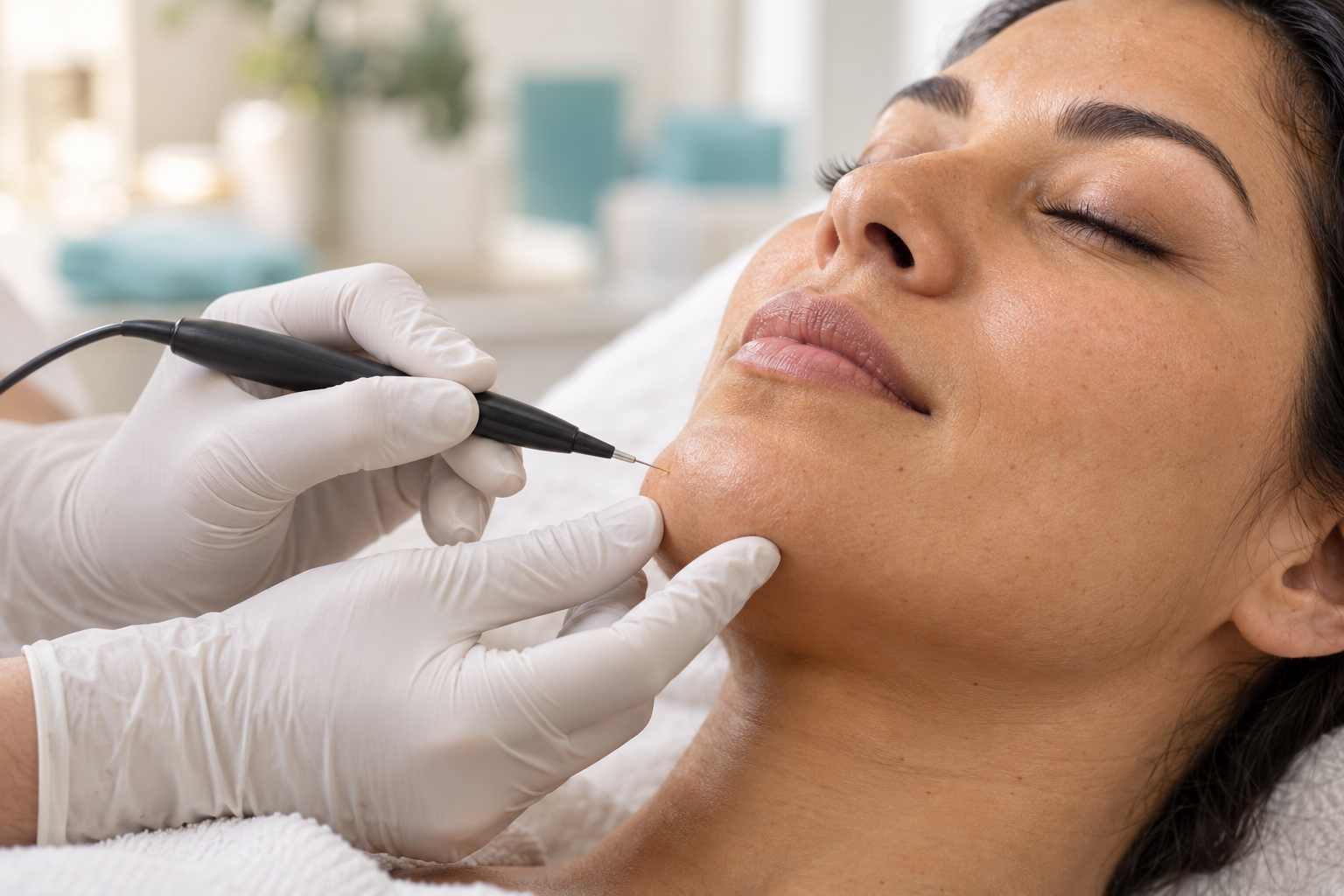
Electrolysis is a permanent hair removal treatment that targets individual hair follicles using a fine probe and a controlled electrical current. Unlike laser, it does not rely on pigment in the hair, making it suitable for all hair colours and skin tones—including blonde, red, grey and white hair.
At Imperia Clinics, treatments are tailored to your hair, skin and comfort level.
Key Features & Technology
Precision Treatment: A fine probe is inserted into the natural opening of each hair follicle to deliver energy to the cells responsible for hair growth.
Galvanic Electrolysis: Uses a direct electrical current to create a chemical reaction within the follicle, destroying the hair-producing cells.
Thermolysis & Flash: Thermolysis uses high-frequency electrical energy to produce heat within the follicle. Flash is a form of thermolysis delivered in very short pulses.
Blend Electrolysis: Combines galvanic current and thermolysis in the same treatment.
Personalised Settings: The treatment method and settings are selected according to your hair characteristics, treatment area and skin response.
What It Treats
Unwanted facial hair, including the upper lip, chin and jawline
Unwanted body hair in suitable treatment areas
Blonde, red, grey and white hairs that laser may not effectively treat
Fine or coarse unwanted hair
Remaining individual hairs following laser hair removal
Treatment Experience
Individual Hair Removal: Each follicle is treated separately, and the treated hair is gently removed.
Comfort: You may feel a brief warming or stinging sensation. Sensitivity varies between people and treatment areas.
Skin Recovery: Temporary redness, mild swelling or small scabs may occur. Aftercare advice is provided to support healing.
Treatment Course: Multiple appointments are needed because hair grows in cycles. The number and duration of sessions depend on the area, hair density and individual growth patterns.
Consultation & Suitability: Your skin, hair and medical history are assessed before treatment to develop a suitable plan.
Long-Term Results: Successfully treated follicles can no longer produce hair. Hormonal changes may stimulate new hair growth from previously untreated follicles.